
Eco swaps for home: the ones that actually make a difference
Most eco swap guides treat the house as one undifferentiated problem. The kitchen, the bathroom, the utility room, the bin bag under the sink: all of it lumped together into a list so long it’s easier to close the tab than start.
This isn’t that. The home has a few high-impact areas and a lot of noise. Here’s where the plastic actually comes from, which swaps move the needle, and which ones you can ignore.
Where household plastic actually comes from
UK households throw away an average of 66 items of plastic packaging every week. That’s not bottles you forgot to recycle. That’s the packaging that cycles through the house on a weekly basis: cleaning products, laundry products, food packaging, bin liners.
Cleaning and laundry are where the opportunity is clearest. Both categories are almost entirely liquid, almost entirely plastic-packaged, and almost entirely replaceable with formats that perform just as well. The average household gets through a significant number of spray bottles, detergent bottles, washing-up liquid bottles, and fabric softener bottles every year. All of them single-use. Most of them not straightforwardly recyclable, because trigger spray mechanisms use multiple plastic types that can’t be separated.
The kitchen and bathroom contribute the rest: food wrap, sponges, bin liners, cotton buds, and miscellaneous single-use packaging. Some of this is genuinely hard to replace. Most of it isn’t.
The swaps that make the biggest difference
Concentrated and refillable cleaning products: yes, and this is the biggest win.
Switching from conventional spray cleaners to concentrated refillable alternatives is the single most impactful home swap on this list. Which? found that concentrated cleaning products use 75% less plastic packaging and 97% less water than standard ready-to-use versions. The environmental case is clear. The performance case has caught up: concentrated cleaners from dedicated eco brands clean as well as conventional products.
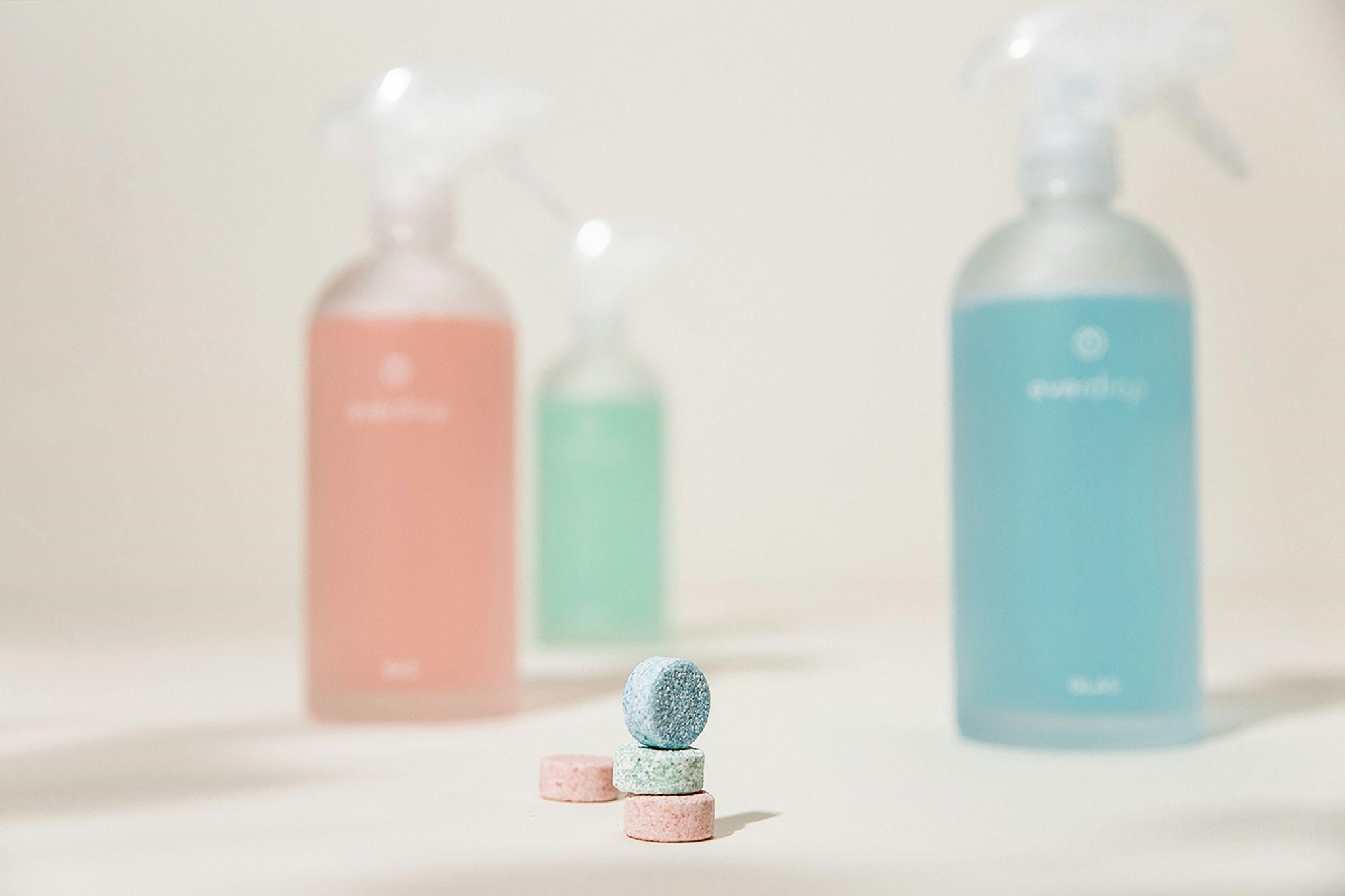
The format to look for: a refillable glass or aluminium bottle, plus concentrated tablets or drops that dissolve in water. One bottle, kept indefinitely. Refills ordered as needed. The plastic is removed almost entirely from the cycle.
Laundry sheets and strips: yes.
Laundry detergent bottles are bulky, heavy, and almost never made from easily recyclable plastic. Laundry sheets, which dissolve in the wash and come in cardboard packaging, replace them entirely. Performance has improved considerably from early generations. They work in both standard and high-efficiency machines, at all temperatures, and take up a fraction of the space. If you’re sceptical, try a pack alongside your existing detergent before committing.
Washing-up liquid: switch to concentrate or a solid bar.
Washing-up liquid is one of the highest-turnover plastic items in most kitchens. Concentrated washing-up liquid, diluted into a refillable bottle, reduces the number of bottles considerably. Solid washing-up bars, which work with a dish brush, eliminate plastic entirely. Both work. The bar requires the most adjustment; the concentrate is the easier switch.
Kitchen sponges: yes, swap immediately.
Conventional synthetic sponges shed microplastics into wastewater with every use, and go in the bin within weeks. Compostable alternatives, including loofah, wood-pulp cellulose sponges, and natural sisal scourers, do the same job without the plastic. Low cost, immediate swap, no adjustment period.
Beeswax wrap and reusable food covers: yes for most uses.
Cling film is one of the few plastic products that genuinely can’t be recycled in most UK councils. Beeswax wrap covers bowls, wraps sandwiches, and keeps cut vegetables fresh. It doesn’t work for raw meat, and it needs cold water for washing. For most other uses it’s a direct replacement. Silicone stretch lids are the alternative for bowls and containers if beeswax isn’t practical.
Bin liners: harder than it looks.
Compostable bin liners are worth using for food waste caddy liners, where they go into food waste collection and compost down properly. For general waste bins, the picture is less clear: compostable liners need industrial composting conditions to break down, which most UK councils don’t provide. Recycled-content plastic bin liners are a more honest swap for general waste until the infrastructure catches up.
Dishwasher tablets: switch to plastic-free packaging.
Most dishwasher tablets come individually wrapped in plastic film, then packaged in a plastic tub. Plastic-free alternatives in cardboard boxes or compostable wrappers are now widely available and perform comparably to conventional tablets. Simple swap, no adjustment needed.
What doesn’t need changing: most kitchen appliances, most storage, most furniture. The home swap conversation focuses disproportionately on things that either aren’t genuinely plastic-heavy or can’t yet be replaced at equivalent quality. The cleaning and laundry aisle is where the wins are. Start there.
How to switch without replacing everything at once
The same principle applies here as everywhere: the most sustainable product in the house is the one you’ve already bought. Use what you have. Replace with better when it runs out.
Cleaning products cycle through every few weeks. That makes them the fastest category to improve. Pick one item: the kitchen spray. When it’s empty, replace it with a refillable bottle and a concentrated refill. Then do the same for the next item that runs out. Within a few months, most of the cleaning aisle is sorted without a single item wasted.
“The cleaning aisle is where most household plastic comes from. It’s also where the alternatives work best.”
Laundry is next. A bag of laundry sheets lasts as long as a bottle of liquid detergent and produces none of the packaging. After that, the kitchen: sponges, food wrap, washing-up liquid. By the time you’ve worked through these categories, the remaining plastic in the house is mostly packaging that came with food. That’s a supply-chain problem, not a consumer one.
The products worth buying
Every product in the Clean Home category on Ziracle has passed the same standard: effective, honestly formulated, and plastic-free or refillable wherever that’s possible. For home cleaning specifically, that means biodegradable ingredients, refillable formats, and no misleading claims about what the packaging actually does to the environment.
The formats to look for: concentrated cleaning tablets or drops with a refillable bottle, laundry sheets in cardboard packaging, compostable sponges, and washing-up concentrate. The brands that earn their place are the ones that have thought through the whole system, not just the label on the front.
You now know where the plastic actually comes from and which swaps are worth the effort. Which means the next time a cleaning product runs out, you know exactly what to replace it with. Ready to shop? Browse our Clean Home category and filter by Plastic Free and Refillable to find products that have already passed the standard.