
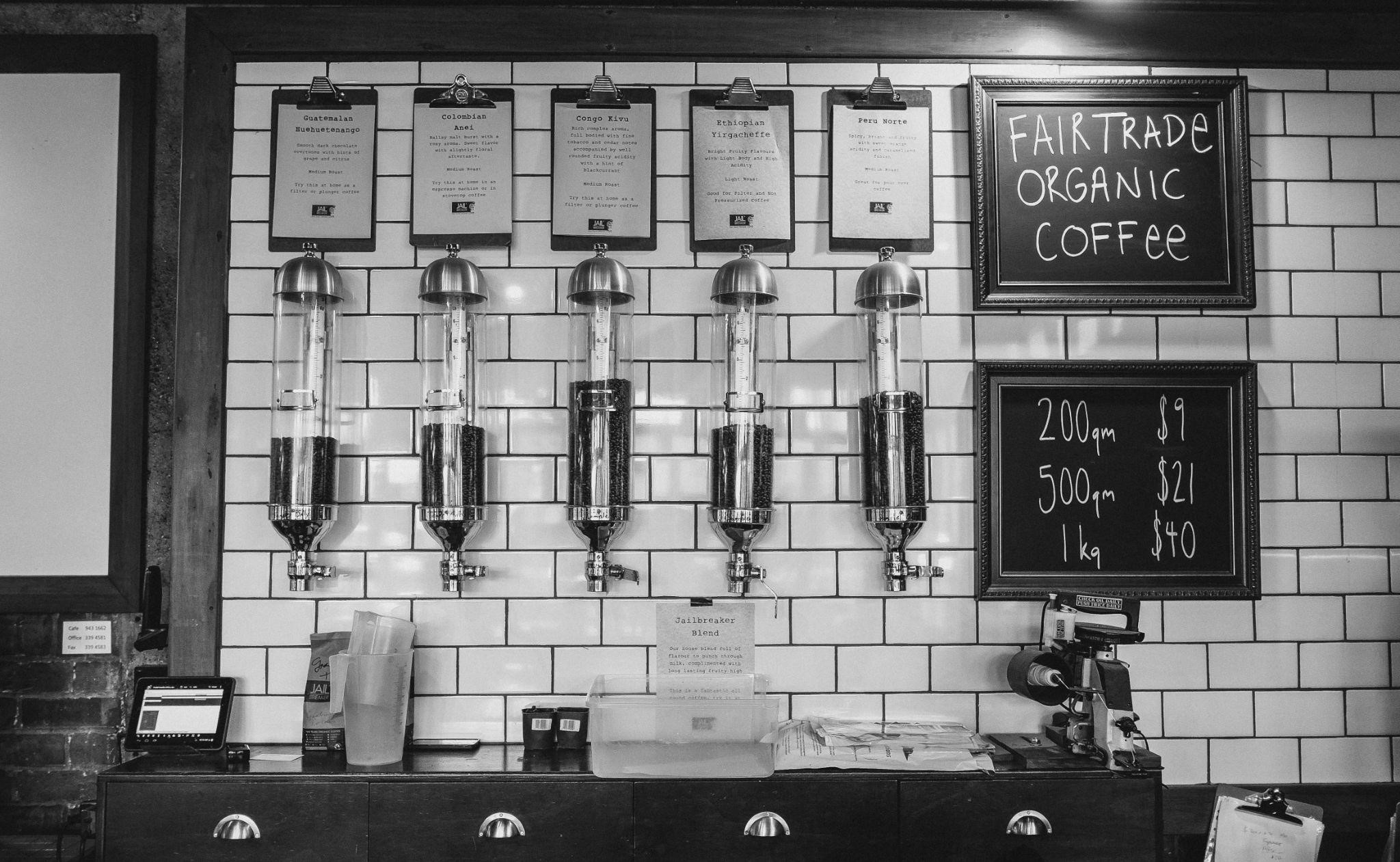
How to buy better coffee: what the certifications actually mean
You already know coffee has problems. You’ve probably seen the Fairtrade logo and assumed it covered everything. It doesn’t. And the brands that look the most considered on the shelf are not always the ones doing the most at origin.
Around 125 million people depend on coffee for their livelihoods, across more than 60 producing countries. Most of them are among the poorest farmers on the planet. What you buy every morning is not a small choice.
Why coffee is more complicated than most people realise
Global coffee consumption has risen by more than 60% since the 1990s. That growth has put enormous pressure on farmers in the tropical regions where coffee grows: pressure to produce more, faster, on thinner margins, in conditions that are getting harder every year.
The environmental picture is complicated too. Traditional shade-grown coffee, grown beneath a forest canopy, supports biodiversity, sequesters carbon, and protects soil health. The Smithsonian Migratory Bird Center describes shade-grown plantations as “the next best thing to a natural forest.” But as demand has grown, most production has shifted to sun-grown monocultures that require intensive pesticide and fertiliser use, accelerate deforestation, and strip the soil.
Climate change is compounding this. By 2050, researchers estimate that up to 50% of the land currently suitable for coffee production may no longer be viable. The farmers most exposed to this are also the least able to adapt.
On the labour side, the picture is equally stark. Many smallholder coffee farmers earn less than $4 a day. Production costs have risen sharply since the pandemic. In Colombia, one farmer’s costs more than doubled in two years, while commodity prices stay volatile. Child labour, though increasingly monitored, is a documented problem in parts of the supply chain.
None of this means stop drinking coffee. It means the choice of which coffee to buy is one that actually matters.
What the certifications actually mean — and which ones count
There are more coffee certifications than most people have time to research. Here is what the main ones actually do.
Fairtrade is the most recognised and one of the most substantive. It guarantees farmers a minimum price regardless of what the commodity market is doing, protection that matters enormously when global prices crash. On top of that, buyers pay a Fairtrade Premium: an additional sum that cooperatives invest in community projects, from schools and healthcare to clean water and infrastructure. Fairtrade International has paid over $1 billion in cumulative financial benefits to producers since 1998. The current minimum price for washed Arabica is $1.40 per pound, with an additional $0.20 social premium and $0.30 organic differential.
“In a region where the average farmer’s income is less than $4 per day, the price premiums guaranteed by these certifications can make a huge difference.” — Root Capital
Organic certification addresses the environmental side. It prohibits synthetic pesticides and fertilisers. Pesticide use in some producing countries increased by 190% in a single decade, and organic methods improve soil health, protect biodiversity, and reduce chemical contamination of local waterways.
Rainforest Alliance focuses on environmental and social practices at farm level. It is process-oriented rather than price-oriented. Farms must demonstrate they’re working toward sustainability goals rather than hitting fixed benchmarks. Meaningful, but less protective of farmer income than Fairtrade.
B Corp certification at the roaster level is the most thorough signal available. It audits the whole business: sourcing practices, worker conditions, environmental impact, governance. A B Corp coffee brand has committed to the standard across its entire operation, from the farm relationship to the packaging decision.
The combination that does the most work: Fairtrade plus organic for both farmer welfare and environmental impact, with B Corp at the roaster level adding confidence that the business itself is built around the right principles.
One honest caveat: certifications are not perfect. Becoming certified can be prohibitively expensive for smallholder farmers who are already working on tight margins. Some excellent coffee is produced by farmers who cannot afford certification but maintain high standards. This is where direct trade relationships, where roasters buy directly from farms they visit and audit themselves, can fill the gap. The distinction worth knowing: direct trade is an ideology, not a regulated standard. When you see it on a bag, it means what the roaster says it means. Ask questions.
The environmental side: packaging, carbon, and what to look for
The conversation about sustainable coffee usually stops at the bean. It shouldn’t.
Packaging is the issue most brands still haven’t solved. Standard coffee bags are multi-layer laminates: foil, plastic, and sometimes paper, that are almost impossible to recycle through standard household streams. Compostable bags are better but require industrial composting facilities most people don’t have access to. The most practical options: brands that use genuinely recyclable packaging, offer refill programmes, or use whole-bean formats that reduce per-cup waste.
Coffee pods are the most wasteful format by volume. A single-use pod produces more packaging waste per cup than any other brewing method. If convenience is the priority, look for brands offering compostable or reusable options. Be clear-eyed about whether “home compostable” claims are backed by accessible composting infrastructure.
Your milk matters more than you think. Studies show that the greenhouse gas emissions from a standard latte are two to four times higher than those from a black coffee or espresso. If you drink coffee with milk regularly, switching to a plant-based alternative cuts the cup’s environmental footprint substantially.
How to make your daily cup go further
A few practical changes make a real difference without requiring a complete routine overhaul.
Buy whole beans and grind at home. Fresh grinding reduces packaging waste and produces a better cup. It’s also a nudge toward buying less frequently and more intentionally.
Choose a reusable cup if you buy out. The environmental cost of a disposable cup is small compared to the bean and milk, but it’s a cost with no benefit.
Ask your coffee shop where their beans come from. It’s a reasonable question, and independent shops with good sourcing relationships will always be able to answer it. The ones that can’t are telling you something.
Look beyond the front of the bag. “Ethically sourced,” “responsibly grown,” and “sustainably inspired” mean nothing without a certification or a named sourcing relationship behind them. Fairtrade plus organic is the combination that does the most work. B Corp at the roaster level tells you the whole business is built around the right principles, not just a single product line.
You now know what the certifications mean and what to look for beyond them. Which means the next bag of coffee you buy can be one you actually feel good about, without spending half an hour reading the small print.
We only stock coffee brands that have passed the same standard as everything else on Ziracle: kind to the people growing it, honest about how it’s made, and good for the planet it grows in. Browse our Food and Drink category and filter by Fair Trade, Organic, and B Corp to find them.