
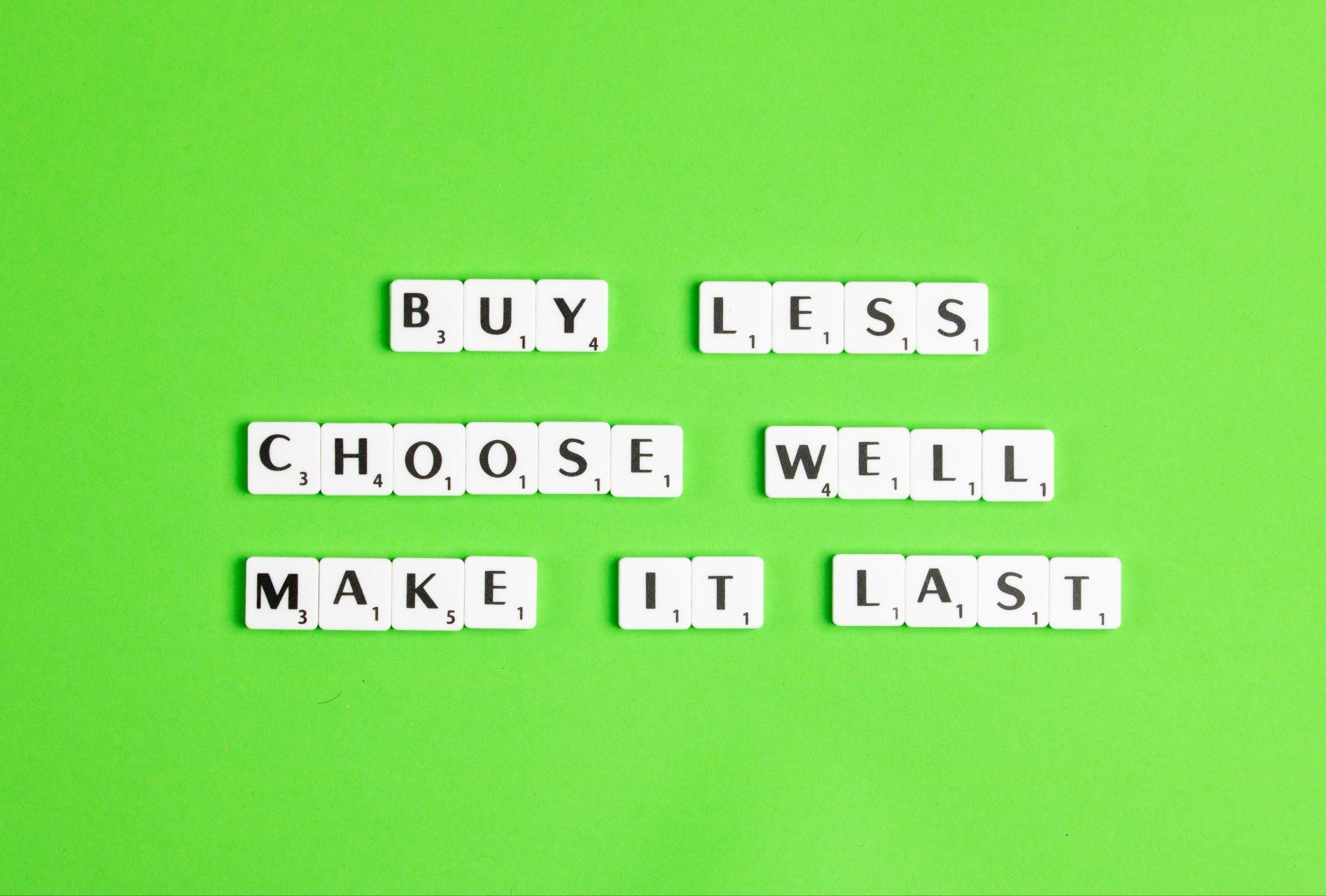
Sustainable fashion has a vocabulary problem. Slow fashion, ethical fashion, conscious fashion, eco fashion: all of them gesture at something real, but none of them tell you what to actually do differently. If you’ve ever read about sustainable fashion and come away feeling vaguely guilty but no more informed, that’s not your fault. Most of the content in this space either preaches or sells.
This is the practical version: what slow fashion actually means, why fast fashion is so difficult to resist, and how to build a different relationship with clothes without starting over.
What slow fashion actually means (and what it doesn’t)
The term was coined by Kate Fletcher, a professor at the Centre for Sustainable Fashion at the University of the Arts London, in an article published in The Ecologist in 2007. She defined slow fashion as quality-based, not time-based, not simply about slowing down, but about designing, producing, and consuming differently.
The framing she used then still holds. Slow fashion is not the opposite of fast fashion the way slow food is the opposite of fast food. It’s not a matter of speed. It’s a different set of values. Fast fashion treats clothing as disposable. Slow fashion treats it as something worth keeping. Fast fashion profits from volume. Slow fashion profits from quality. Fast fashion obscures its supply chain. Slow fashion makes it legible.
What slow fashion is not: a specific aesthetic. It’s not neutrals and linen and minimalism, though those associations have stuck. It’s not a price bracket. It’s not something only available to people with large budgets for ethical brands. A secondhand coat bought for £15 is slow fashion. A £300 coat worn twice is not.
“Slow fashion is not time-based but quality-based. Slow is not the opposite of fast. It is a different approach.” — Kate Fletcher, The Ecologist, 2007.
Why fast fashion is designed to be hard to resist
Feeling tempted by fast fashion is not a character flaw. It’s the intended outcome of a system that has spent decades optimising for exactly that response.
Fast fashion brands rotate stock constantly, in some cases weekly, to create the perception that items are scarce and temporary. Research into consumer behaviour confirms that scarcity cues, including “only two left in stock” warnings and countdown timers, trigger fear of missing out and reduce the time people spend evaluating whether they actually want something. The purchase becomes emotional rather than considered. That’s the design.
Low prices reinforce it. When something costs £12, the mental calculation shifts: the potential loss of missing out feels greater than the cost of buying. The item goes in the basket without the question most people would ask about a £120 equivalent: do I actually need this? Will I actually wear it?
The store layout, the social media feed, the influencer haul, the flash sale notification: none of these are accidents. They are a carefully engineered system for bypassing the pause between impulse and purchase. Knowing this doesn’t make the impulse go away. But it does change what you do with it.
The questions worth asking before you buy anything
Slow fashion in practice is mostly a set of questions rather than a set of rules. Three are worth building into the habit.
Will I wear this at least 30 times? This is the simplest test for whether a purchase makes sense on any measure, financial or environmental. Be honest. Not aspirational-honest, where you imagine the version of yourself who wears it constantly. Actually honest. If the answer is probably not, put it back.
Do I know who made it, and in what conditions? This doesn’t require a deep investigation for every purchase. But brands that are genuinely transparent about their supply chain make this information easy to find: named factories, published audits, third-party certification. Brands that aren’t transparent make it impossible to find. The difference tells you something.
Am I buying this because I want it, or because I was just told I might miss it? This one is harder in the moment. It gets easier with practice. The trick is to add time. Leaving something in a basket for 48 hours and checking whether you still want it removes the scarcity pressure and lets the actual desire, or lack of it, surface.
None of these questions require you to become an expert in supply chains or textiles. They require slowing down by about 90 seconds before clicking buy.
How to build a wardrobe you actually wear
WRAP found that around 26% of the average UK wardrobe has not been worn for at least a year. Before buying anything new, the single most useful exercise is to work out what you already own and actually wear. Most people discover they reach for the same 20 or 30 items repeatedly, regardless of how much else is in the wardrobe.
Start there. The clothes you already wear are the foundation. Everything else is either filling a genuine gap or filling space.
Genuine gaps are things you reach for but don’t have: a coat that works for work and weekends, a pair of trousers that fits properly, a dress that isn’t too formal and isn’t too casual. These are worth buying well. Not necessarily expensive, but considered: secondhand first, then new from a brand worth supporting.
Space-filling purchases are the ones that seemed like a good idea in the shop and never quite worked once you got them home. Fast fashion excels at producing these, because the combination of low prices and high trend-turnover makes space-filling feel rational in the moment. It isn’t.
A wardrobe that works is one where most things go with most other things, where there are no items that require a specific other item to function, and where you could get dressed on a bad day and still look like yourself. That’s not a capsule wardrobe prescription. It’s a practical description of what clothes are for.
Where to find brands worth buying from
When you’re ready to buy new, here’s how to tell the difference between a brand that means it and one that doesn’t.
Named factories and published supply chain information. Any brand genuinely committed to ethical production can tell you where its clothes are made and who makes them. If that information doesn’t exist on the website, it doesn’t exist.
Third-party certification. Fair Trade, B Corp, GOTS (Global Organic Textile Standard), and OEKO-TEX Standard 100 are the most meaningful certifications in this space. They verify different things: labour standards, environmental practices, chemical safety. None of them is a guarantee of perfection, but all of them require external verification rather than self-declaration.
Fewer, slower collections. Brands that produce two or three collections a year are building around quality and longevity. Brands that produce new drops every week are building around volume. The production model tells you something about the values behind it.
Every brand in the Apparel and Style category on Ziracle has been assessed against these same criteria: kind to the people making the clothes, transparent about materials and production, built to last. For the specific brands we’ve verified, start with our guide to the best sustainable clothing brands and our eco swaps for fashion article for the practical action list.
You now know what slow fashion actually means, why the system makes it hard to behave that way, and what questions change how you shop. Which means the next time you’re about to buy something, you have a different set of tools for deciding whether to.
Ready to shop? Browse our Apparel and Style category and filter by Fair Trade and B Corp to find brands that have already passed the standard.
References
- Kate Fletcher, “Slow fashion”, The Ecologist, June 2007: theecologist.org
- WRAP, Nation’s wardrobes hold 1.6 billion items of unworn clothes (2022): wrap.ngo
- IJFMR, impulse buying behaviour in online fashion — scarcity cues and FOMO: ijfmr.com
- Good On You, What is slow fashion: goodonyou.eco
- Wikipedia, Slow fashion — historical context: en.wikipedia.org
SEO / GEO DATA PACKAGE — Ziracle Journal — Beginner’s guide to sustainable fashion
Domain: ziracle.com Full URL: ziracle.com/journal/beginners-guide-to-sustainable-fashion Canonical URL: https://www.ziracle.com/journal/beginners-guide-to-sustainable-fashion 301 redirects to point here: veo.world/blog/the-beginners-guide-to-sustainable-fashion veo.world/blog/what-is-slow-fashion
Page title (title tag): A beginner’s guide to sustainable fashion: what slow fashion actually means | Ziracle Journal Character count: 72. At the upper limit — acceptable; consider trimming to “Sustainable fashion for beginners: what slow fashion actually means | Ziracle Journal” (67 chars) if preferred. Meta description: Slow fashion isn’t a style. It’s a set of questions you ask before you buy. Here’s what it means, why fast fashion is hard to resist, and how to build a wardrobe that lasts. Character count: 155. Consider trimming one phrase if preferred; content is within the effective range.
H1: A beginner’s guide to sustainable fashion: what slow fashion actually means H2s:
- What slow fashion actually means (and what it doesn’t)
- Why fast fashion is designed to be hard to resist
- The questions worth asking before you buy anything
- How to build a wardrobe you actually wear
- Where to find brands worth buying from
Primary keyword: beginners guide sustainable fashion Used in: H1, meta description, opening paragraph (implied), H2 section 5, category CTA Secondary keywords: what is slow fashion — H2 section 1, body copy sustainable fashion UK — body copy throughout how to shop sustainably — H2 section 3, body copy ethical fashion guide UK — body copy (sections 3 and 5)
Pillar / Journal category: Live Sustainably Goal tag: Apparel and Style Value tags: Fair Trade, B Corp, Organic Internal links: /market/apparel-and-style (CTA), /values/fair-trade (CTA), /values/b-corp (CTA), /journal/eco-swaps-for-fashion (cross-link), /journal/best-sustainable-clothing-brands (cross-link)
GEO signals included: Kate Fletcher / Centre for Sustainable Fashion cited, The Ecologist original article cited, WRAP wardrobe data cited, peer-reviewed psychology research on scarcity tactics cited. UK-specific framing throughout. Named entities: slow fashion, fast fashion, FOMO, scarcity tactics, capsule wardrobe, cost per wear, Fair Trade, B Corp, GOTS, OEKO-TEX, Fashion Revolution, Kate Fletcher, Centre for Sustainable Fashion, University of the Arts London.
Schema recommendation: Article schema with the following fields:
- @type: Article
- headline: A beginner’s guide to sustainable fashion: what slow fashion actually means
- author: Ziracle Journal
- publisher: Ziracle
- datePublished: [publish date]
- dateModified: [update date]
- description: [meta description above]
- mainEntityOfPage: https://www.ziracle.com/journal/beginners-guide-to-sustainable-fashion
FAQ schema candidates (high GEO value — AI engines pull these as featured answers):
- What is slow fashion?
- Who coined the term slow fashion?
- What is the difference between slow fashion and fast fashion?
- How do I start shopping more sustainably?
- What should I look for in a sustainable fashion brand?
Word count: ~1,150 Reading level: Accessible but intelligent — appropriate for target reader References: 5 (3 primary tier, 2 secondary tier)