Veo and Wearth are now Ziracle. Same mission, better platform. See what's new

Is There A Link Between Plant-Based And Mental Health?

||

It seems as though recently plant based / vegan diets have become increasingly popular and there is quite a lot of attention drawn to the fact that removing animal products from our plate has a benefit in terms of physical health, environmentally and of course… for the animals!

But did you know that some research has made links between a plant based diet and mental health?!

I, myself am a registered associate nutritionist, with a long history of mental health difficulties including anxiety, depression and disordered eating who has a predominantly plant based diet. So I find this up and coming area of nutritional research incredibly exciting!

What does the science say?

For a while now the field of nutritional science has made a connection between the food we eat and our mood.

But why?

Well, preclinical evidence suggests that there is a circular link between the gut, the gut microbiome and the brain and is often referred to in science as the gut-brain axis.

In simple terms that just means that all three of those interlink and affect each other.
Plenty of research now suggests that alterations between the gut-brain connection has implications for neurological and psychiatric conditions.

When referring to the microbiome, I am referring to the community microorganisms that live in the gut, and digestive tract.

When our gut is out of whack and our microbiome if unbalanced, it can cause inflammation of the gut and ultimately this has been connected to both depression and anxiety.

This is because a healthy gut has been linked to the function of a healthy central nervous system.

If you need more convincing that our gut can affect our well-being, well you know the happy chemical serotonin floating around our bodies…?

95% of this mood balancing chemical is released from the gut!

Our bodies are beautiful and clever things, and when we provide the right conditions, our body and brain can work harmoniously together – that includes nutrition!

So does a diet high in plant foods help my mental health?

Research in this field is very current and is still emerging, so there is still lots to be discovered.

But from reading the available scientific literature, it appears that a vegan or vegetarian diet, compared to one including meat, contributes to a more stable and more varied microbiota and good bacteria.

Not only this… Increased fibre has been linked to an increase in serotonin AND it has been shown to increase the levels of good bacteria in the gut!

As both of these factors have been shown to effect mood. An increase of fibre in your diet, is a great AND easy place to start if you are looking to improve your mental health.

What kind of fibre you ask?
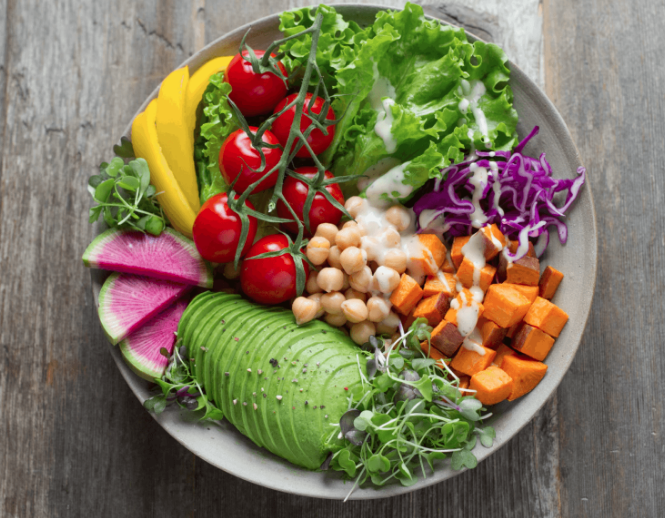
high fibre, colourful salad bowl with tomatoes, avocado, chickpeas, sweet potato, cabbage and lettuce.

Well, fruit, vegetables and wholegrain have been shown in studies to reduce levels of anxiety, depressive symptoms and to have a positive effect on healthy mood states!

This is another reason to boost the number of plants on your plate!

Do I have to be 100% vegan?

Absolutely not. Firstly, vegan and plant based are completely separate things.

Veganism is the avoidance of animal products in every area of one’s life (cosmetics, clothing, diet etc.), whereas plant based is the exclusion of animal products from one’s diet (meat, fish, dairy, eggs).

The rise in popularity of a vegan diet has been amazing for environmental concerns, however it has promoted the growth of the ‘junk food vegan’ diets i.e. those high in processed vegan goodys like ice cream, sugary sweets etc.. (NOT beneficial to your gut – brain health).

A whole foods plant based diet, rich in fruits, vegetables, nuts, seeds, wholegrains and fermented foods is one of the healthiest ways to improved your gut microbiome AND ultimately this can positively impact your mental health.

SO whatever stage of your health journey you are at, I would advise implementing as many plants as you can into your daily intake and avoid or at least reduce foods which will negatively effect your gut i.e. processed goods, artificial sugars and meat.

Remember, you don’t have to be 100% perfect with your diet, but any step towards a more natural plant based diet will have a positive effect on your health.

Which foods do I recommend for a healthy gut and mind?

· All fruits and lots of them (full of anti-inflammatory properties and antioxidants)

· Lots of vegetables!

· Protein sources – beans, pulses, lentils, tofu, tempeh

· Healthy fats in moderation – avocado, nuts, seeds, olive oil

· And don’t forget to STAY HYDRATED to keep the digestive system happy!

Of course, your mental health doesn’t solely depend on your diet. As well as adding more plants to your diet it is so important to take care of yourself in other areas of your life too.

Getting enough water and exercise (150 minutes a week), as well as spending time with lovely people, getting fresh air and taking time to reflect on your emotions through meditation or journaling are all really important pieces which make up the puzzle which is a healthy brain and mind!

Happy food from my website www.caseygemma.com

Your food really does affect your mood, so eat more plants, eat less processed junk and as always – be kind to yourself!
Diet culture: the problem with calorie counting

|||||

How to have a positive relationship with food

TWEET THIS


Diet culture is a pervasive part of modern society. According to a survey by the UK Parliament in 2020, 61% of adults feel negative about their body image while 53% report that lockdown made them feel worse about their appearance. It is estimated that approximately 1.25 million people in the UK have an eating disorder. This number has been rising sharply with reports at the start of 2020 stating that hospital admissions increased by 37% in the past 2 years.

Despite this, the UK government recently confirmed that it will be going ahead with plans to make calorie counts mandatory on restaurant menus from April 2022. This arises in an attempt to tackle obesity in the UK which is now thought to be linked to an increased risk of contracting COVID-19 among other serious health issues. Almost two-thirds of the UK population is overweight or obese and with statistics like these, it is no surprise that the government wants to take action.

Credit: RawPixel

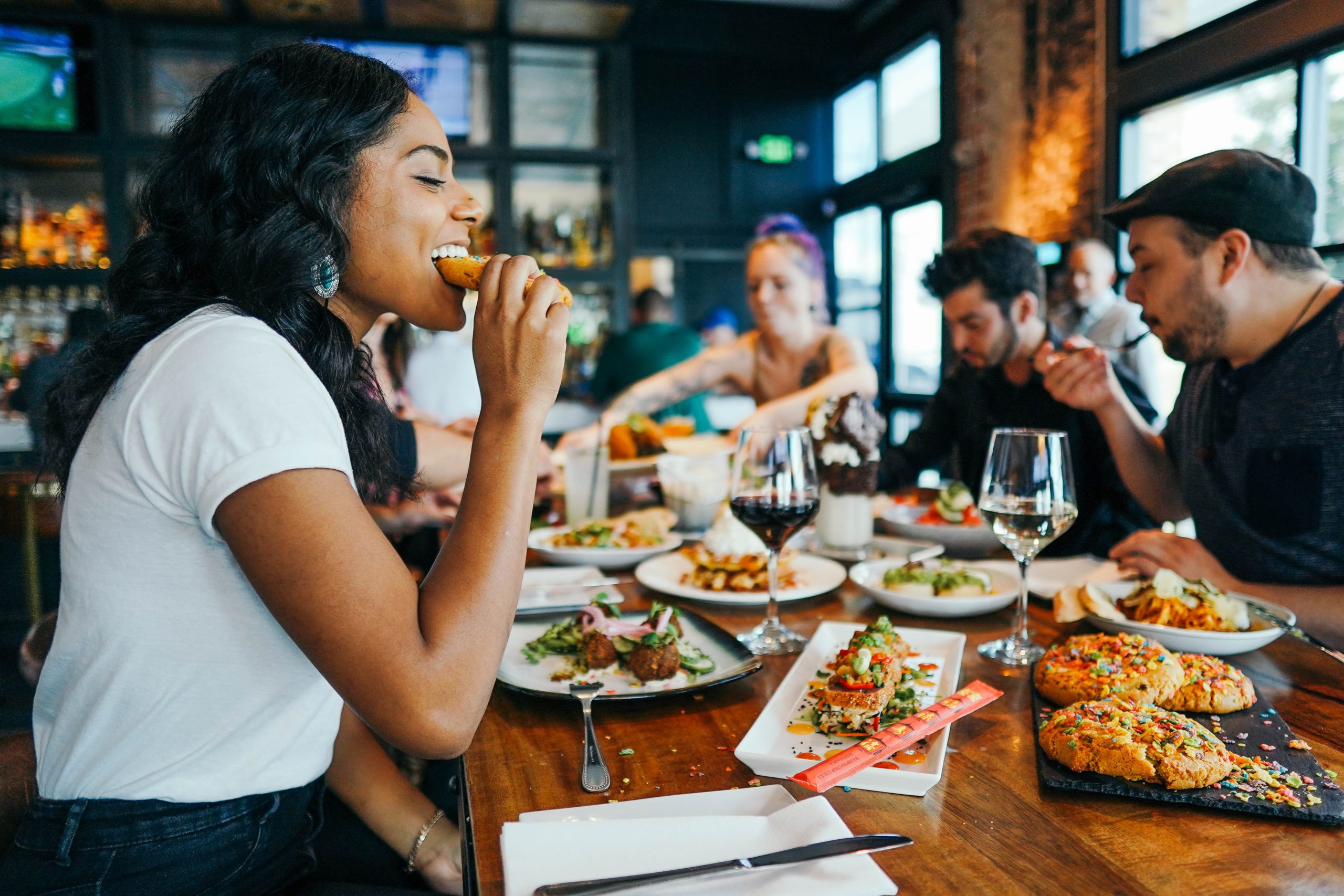
After the year we’ve all had, health is of course a top priority for everyone right now, but is enforced calorie counting the way forward? Not only has it been proven ineffective but it is also highly dangerous for those struggling with eating disorders, disordered eating, or even orthorexia*. And for those who are relatively healthy and looking to treat themselves or celebrate with a moment of indulgence, eating out may no longer be the enjoyable, guilt-free experience we all look forward to. What these statistics show us is that the issue isn’t really about eating too many or too few calories but rather our complicated relationship with body image and food. So how can we achieve balance?

*Orthorexia is an unhealthy focus on eating in a healthy way. Eating nutritious food is good, but if you have orthorexia, you obsess about it to a degree that can damage your overall well-being. Steven Bratman, MD, a California doctor, coined the term in 1996.

We know fad diets don’t work. Calorie counting and restrictive eating has been proven to be ineffective in the long-term with two-thirds of people regaining any weight they’ve lost within 1-5 years. If you’ve tried one for yourself, you’ve probably experienced this first hand. But an emerging concept called ‘set point theory’ might explain why this happens. According to this theory, our bodies have a natural, pre-determined weight range that adjusts as we age. When we attempt to alter our weight outside this range by dieting, our hypothalamus, the part of the brain that helps to regulate our hormones and metabolism, kicks into defense mode. Depending on whether we are attempting to lose or gain weight, our metabolism adjusts to conserve or use more calories. Our levels of ghrelin ‘the hunger hormone’ and leptin ‘the satiety hormone’ also adjust, in an attempt to get us to eat more (or less) in order to shift us back to our set point weight.

Credit: Stephanie Buttermore

While further research is required to determine the validity of this theory, its popularity continues to grow, particularly as more people are rejecting diet culture in favour of intuitive eating lifestyles. Intuitive eating is a philosophy that encourages us to reject diet mentality and to instead become more in tune with our hunger and satiety cues. There is no restriction on the type of food you eat but rather a more holistic approach that relies on the individual to determine what their body is craving at any given time. One popular fitness Youtuber and Biomedical Scientist, Stephanie Buttermore, Ph.D., tried this out for herself and went viral last summer with her ‘all-in’ diet, an attempt to reset her hunger cues and settle into her own natural set point weight, with interesting results. While this might be seen as an extreme way to re-learn your relationship with food, ditching the calorie counting is a great place to start. Here at Veo, we know that not all calories are created equal so instead, we’re focused on fuelling our bodies with the very best. All our food is plant-based and free from refined or artificial sugar that is actually known to spike our ghrelin (hunger) levels, sending us out of balance. Here are a few ways to incorporate healthier eating habits into your lifestyle:

Credit: Better Nature | veo.world/betternature
  1. Try a flexitarian diet – For anyone who has previously struggled with restrictive dieting, this method allows for more balanced eating without completely cutting anything out from your diet. If you’re interested in adding a few meat-free meals to your week, check out our range of delicious meat alternatives.
  2. Incorporate more superfoods into your diet – With high vitamin and mineral content, these foods can naturally help your body to fight off disease, increase energy levels and promote overall better health and wellbeing. Check out our high-quality range of superfoods here!
  3. Boost your diet with supplements – In a perfect world we’d always eat the right amount of fruit and veg, drink the right amount of water and get the right amount of sleep but sometimes we just need that extra vitamin boost. Discover our range of plant-based vitamins and supplements here!

It’s time to break up with diet culture. Changing your relationship with food, paying attention to your hunger and satiety cues, and fuelling your body adequately to support optimal function, will help you stay healthy no matter what the scale or calorie tracker says. Click here to discover more of the delicious and nutritious food we have here on Veo.